A Constant State of Dhikr
As-salāmu ʿalaykum wa raḥmatullāhi wa barakātuh.
Aʿūdhu billāhi min ash-shayṭāni r-rajīm. Bismillāhi r-Raḥmāni r-Raḥīm. Aṣ-ṣalātu wa s-salāmu ʿalā Rasūlinā Muḥammadin Sayyidi l-awwalīna wa l-ākhirīn. Madad yā RasūlAllāh, madad yā Sādāti Aṣḥābi Rasūlillāh, madad yā Mashāyikhinā, dastūr yā Shaykh ʿAbdullāh al-Fā’iz ad-Dāghistānī, Shaykh Muḥammad Nāẓim al-Ḥaqqānī. Madad. Ṭarīqatunā aṣ-ṣuḥbah wa l-khayru fi l-jamʿiyyah.
Bismillāhi r-Raḥmāni r-Raḥīm: وَلِلَّهِ ٱلْأَسْمَآءُ ٱلْحُسْنَىٰ فَٱدْعُوهُ بِهَا “Wa li-Llāhi l-asmā’u l-ḥusnā fad‘ūhu bihā” “And to Allah belong the Most Beautiful Names, so call on Him by them.” (Qur’ān 7:180). ṢadaqAllahu l-ʿAẓīm.
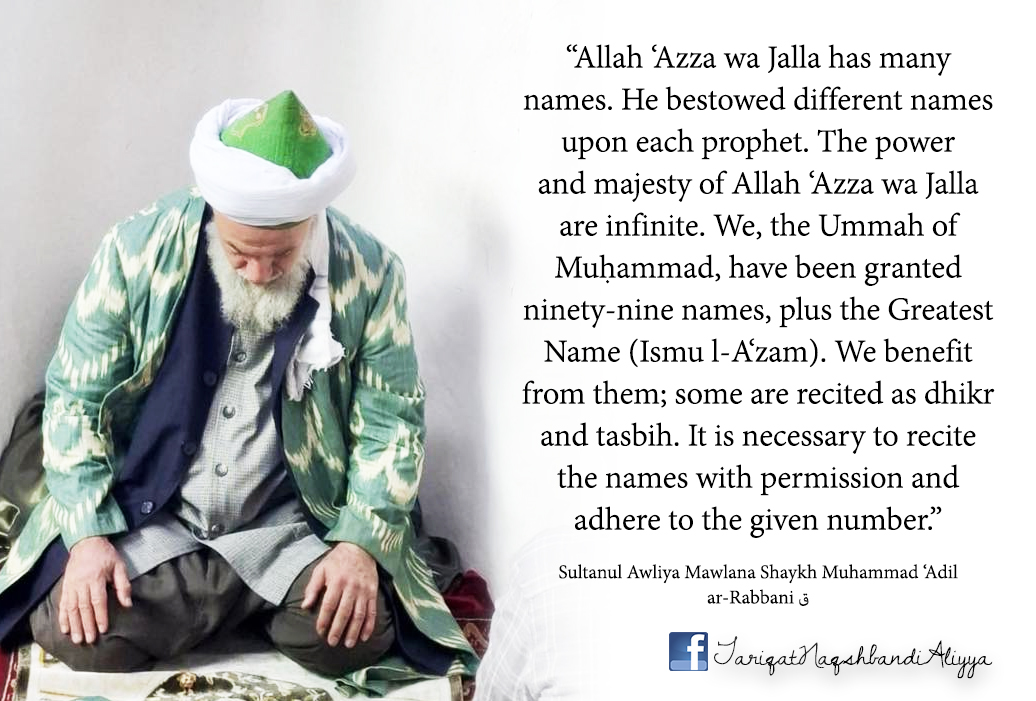
Allah ʿAzza wa Jalla has many names. He bestowed different names upon each prophet. The power and majesty of Allah ʿAzza wa Jalla are infinite. We, the Ummah of Muḥammad, have been granted ninety-nine names, plus the Greatest Name (Ismu l-Aʿzam). We benefit from them; some are recited as dhikr and tasbih.
Some names are exclusive to Allah ʿAzza wa Jalla and are not given to anyone else. Some can be used by ordinary people and prophets, but some are entirely special.
So of course, we do not know all the names given to other prophets. Because from Adam ʿalayhi s-salām onwards, each of them has been given thousands of different names. All ninety-nine names bestowed especially upon us, the Ummah of Muḥammad ṣallAllahu ʿalayhi wa-sallam are barakah. But as with everything, Allah ʿAzza wa Jalla has reserved the greatest, most honorable, and most beautiful names as a gift for our Prophet ṣallAllahu ʿalayhi wa-sallam.
Therefore, the recitation of some names is, of course, permissible only with permission, while others can be recited by everyone. Everyone can recite the name “Allah” as many times as they wish. Some ṭarīqahs have a specific number of recitations. It might become heavy upon some people who recite them without permission.
Therefore, it is necessary to recite the names with permission and adhere to the given number. There are also those who recite on their own; may Allah accept their recitation and forgive them.
But as we said, the recitation of “Allah, Allah,” the blessed and glorious name of Allah ʿAzza wa Jalla, is recited in our ṭarīqah both with the tongue and with the heart.
When this recitation is done both with the tongue and the heart, the person is always in a state of dhikr (remembrance). Even if the tongue is not engaged, the heart constantly recites “Allah, Allah,” so a person remains in a state of perpetual remembrance without even realizing it.
So, a person is in a state of remembrance throughout their entire life. The barakah of Allah ʿAzza wa Jalla’s blessed name strengthens a person’s īmān and body; light descends upon the heart and body through that name.
May Allah never diminish that light from us, but keep it constant, inshā’Allah. May that remembrance remain perpetual in our hearts, inshā’Allah.
Wa min Allahi t-Tawfīq.
Al-Fātiḥa.